
Atlas Publishes Weathering Testing Guide for Outdoor Robots
Robots are moving outdoors at scale, into logistics yards, agricultural fields, construction sites, and delivery routes. The environmental stresses they face (and the test methods to evaluate them) have been proven across automotive, aerospace, and electronics for decades. But their application within robotics remains inconsistent. As programs push quickly into outdoor deployment, durability issues can surface late, after designs are committed and tooling is in place.
The new Atlas guide is designed to help teams address those issues, before they create costly manufacturing or warranty issues. It details failure modes that directly affect robot performance and safety: yellowing or haze in optical navigation windows, embrittlement of polymer housings, sealant and gasket degradation, and electronic failures due to thermal buildup or moisture ingress. The guide covers proven testing methodologies using xenon-arc instruments, including the Atlas Weather-Ometer®,
Xenotest®, and SUNTEST® lines, and why spectrum quality directly affects the reliability of results for UV-sensitive polymers. It also addresses the major standards that govern different materials and components (ISO 4892-2 for plastics, ASTM D7869 for transportation coatings, IEC 60068-2-5 for electronics). With acceleration factors commonly exceeding 10x, xenon-arc testing can compress years of outdoor exposure into weeks of laboratory testing.
Accelerated testing only goes as far as its correlation with real-world exposure. The guide outlines how to compare laboratory results against natural weathering at Atlas benchmark exposure sites, like Miami, Florida and Phoenix, Arizona. By establishing observed acceleration factors and validating the correlation of laboratory and natural results, test programs gain a credible basis for connecting lab data to field performance
Component-level testing also has limits. It cannot fully capture system-level effects like heat buildup across assemblies, seal behavior under sustained compression, or sensor response under combined radiation and temperature loads. The guide covers large-scale solar simulation of complete robots under MIL-STD-810H and IEC 60068-2-5 Sa-method protocols, distinct from the xenon-arc weathering methods used for material-level UV degradation, where assembled systems can be evaluated under controlled but realistic conditions.
"The guide walks through each stage of validation, from material selection and component qualification through full-system solar exposure," said Dr. Oliver Rahäuser, Senior Product Manager at Atlas Material Testing Technology. "Skipping steps increases risk.Thermal interactions, seal compression, optical drift – these are system-level problems, but they start with good material data. The goal is a complete program so durability issues surface in the lab rather than in the field.”
Weathering and Solar Stress Testing of Robot Parts and Entire Robotsis intended for engineers, test laboratories, and program managers working to build environmental durability into robotic platforms earlier in development. Download the free application guide, or for more information, contact info@atlas-mts.com.
For over 100 years, Atlas has been a leader in materials testing, offering a complete line of weathering testing instruments and services for accelerated and natural weathering. Atlas serves a range of industries including automotive; paint and coatings; plastics and additives; textiles; pharmaceutical and consumer products; architecture; aerospace; photovoltaics; and packaging. Its Atlas Weathering Services Group (AWSG) operates five laboratories and 25 outdoor exposure sites around the world. Atlas MTS is ISO 17025 and ISO 9001:2008 registered. Atlas products are designed and manufactured to conform to international, national and industry standard test methods, including ISO, ASTM, DIN, JIS and numerous others.
Atlas MTS is headquartered in Mount Prospect, Illinois. It is a business of AMETEK, Inc., a leading global provider of industrial technology solutions serving a diverse set of attractive niche markets with annual sales of approximately $7.5 billion.
Atlas Material Testing Technology GmbH
Vogelsbergstr. 22
63589 Linsengericht-Altenhaßlau
Telefon: +49 (6051) 707-160
Telefax: +49 (6051) 707-161
http://atlas-mts.de
Global Marketing Communications Manager
Telefon: +49 (6051) 707-160
Fax: +49 (6051) 707-161
E-Mail: sandra.schneider@ametek.com


Das könnte dich ebenfalls interessieren
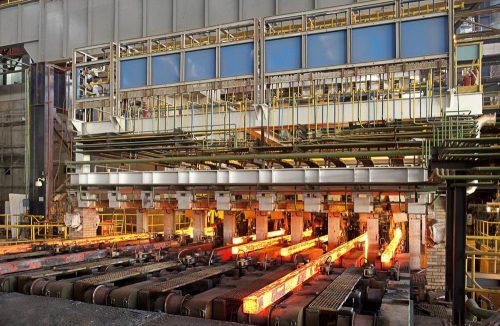
Modernization and expansion of eight-strand Concast billet caster at Jindal Shadeed Iron & Steel LLC in Oman
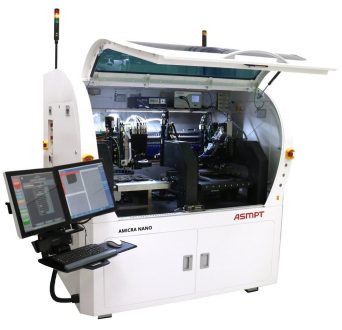
ASMPT Semiconductor Solutions auf der electronica 2022