-
Arnold NextG Blogspot: Drive-by-Wire Decoded – Vehicle Control for Autonomous Systems
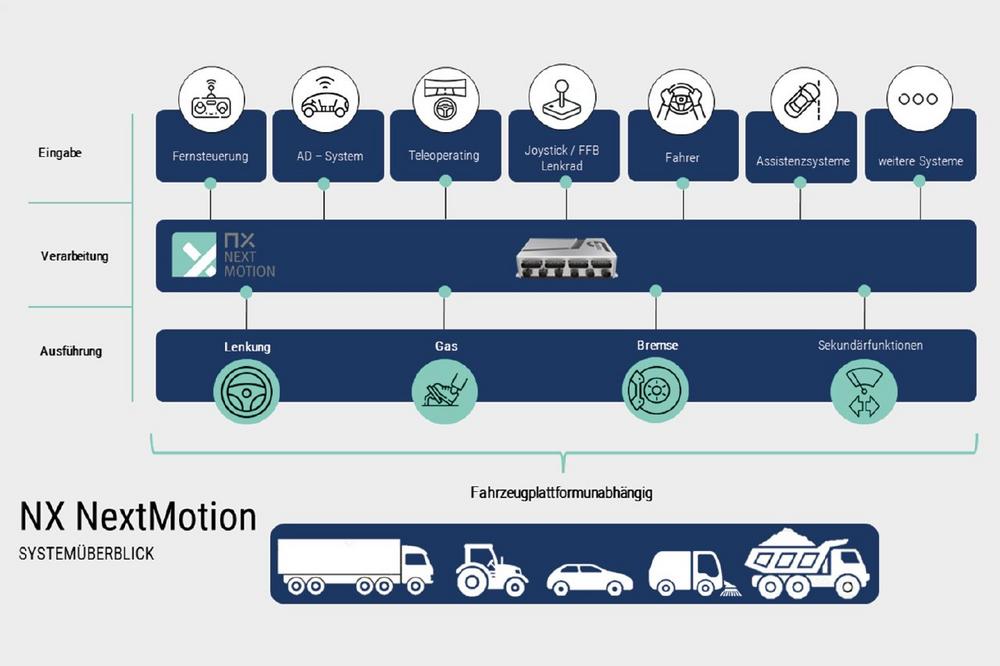
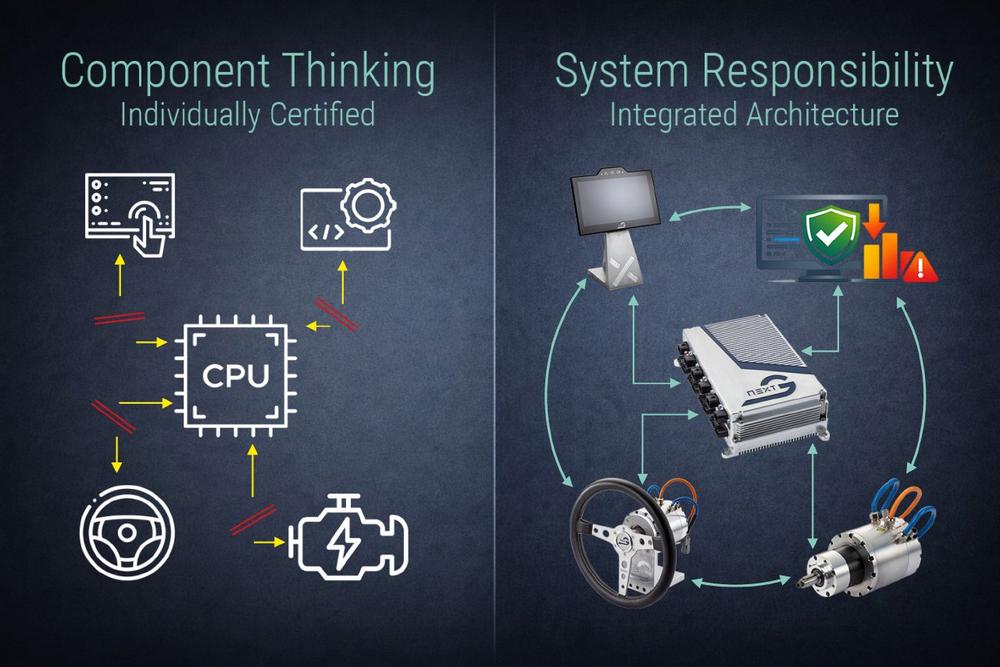
Drive-by-wire technology is considered well-established. Yet as automation increases, it becomes clear that the crucial question is not which components are used—but how they work together as a complete system. In the discussion surrounding electronic vehicle control, it is often implicitly assumed that a functioning overall system can be assembled from high-quality individual components. Steer-by-wire steering, brake-by-wire braking, redundant control units—all these technologies exist and, in many cases, are already safety-certified. The conclusion seems obvious: if every single component is safe on its own, the overall system must also be safe. From a technical perspective, however, this assumption falls short. This is because the safety, availability, and controllability of autonomous…
-
Arnold NextG Blogspot: Drive-by-Wire Decoded – Fahrzeugkontrolle für autonome Systeme
Drive-by-Wire-Technologie gilt als etabliert. Doch mit zunehmender Automatisierung zeigt sich: Die entscheidende Frage ist nicht, welche Komponenten eingesetzt werden – sondern wie sie als Gesamtsystem zusammenarbeiten. In der Diskussion um elektronische Fahrzeugsteuerung wird häufig implizit angenommen, dass sich ein funktionierendes Gesamtsystem aus hochwertigen Einzelkomponenten zusammensetzen lässt. Steer-by-Wire-Lenkung, Brake-by-Wire-Bremsen, redundante Steuergeräte – all diese Technologien existieren und sind in vielen Fällen bereits sicherheitszertifiziert. Die Schlussfolgerung scheint naheliegend: Wenn jede einzelne Komponente für sich sicher ist, muss das Gesamtsystem ebenfalls sicher sein. Technisch betrachtet greift diese Annahme jedoch zu kurz. Denn Sicherheit, Verfügbarkeit und Kontrollierbarkeit autonomer Fahrzeuge entstehen nicht durch die Addition einzelner Funktionen – sondern durch das Verhalten des Gesamtsystems. Warum…
-
Arnold NextG Blogspot: Drive-by-Wire Decoded – Vehicle Control for Autonomous Systems
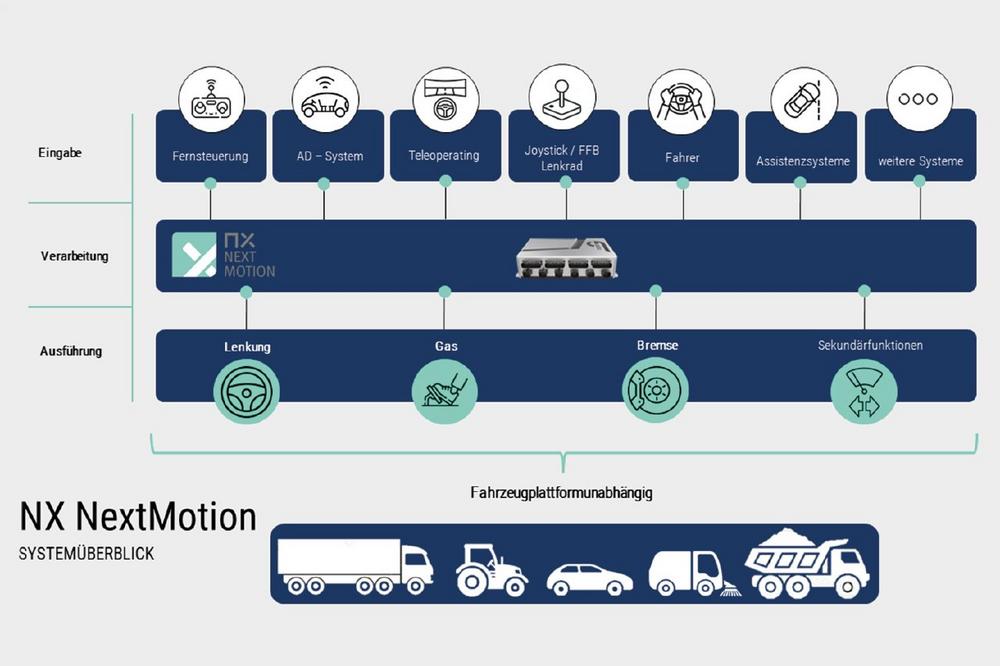
Drive-by-wire is considered established – but when it comes to vehicles that are supposed to drive autonomously or be controlled remotely, it becomes clear that it is not the individual components that are decisive, but rather the architecture of the vehicle control system. Autonomous driving is usually discussed in terms of sensor technology, AI, and computing power. However, one key prerequisite often remains in the background: the safe control of vehicle movement. Electronic steering, braking, and drive systems have been part of modern vehicle architectures for years. Accordingly, many consider X-by-wire to be a mature technology. Established supply chains, well-known industry players, and numerous series applications give the impression of…
-
Arnold NextG Blogspot: Drive-by-Wire Decoded – Fahrzeugkontrolle für autonome Systeme
Drive-by-Wire gilt als etabliert – doch dort, wo Fahrzeuge autonom fahren oder aus der Ferne gesteuert werden sollen, zeigt sich: Entscheidend ist nicht die einzelne Komponente, sondern die Architektur der Fahrzeugkontrolle. Autonomes Fahren wird meist über Sensorik, KI und Rechenleistung diskutiert. Eine zentrale Voraussetzung bleibt dabei oft im Hintergrund: die sichere Kontrolle von Fahrzeugbewegung. Elektronische Lenkung, Bremsen und Antriebssysteme sind seit Jahren Bestandteil moderner Fahrzeugarchitekturen. Entsprechend gilt X-by-Wire vielen als ausgereifte Technologie. Etablierte Lieferketten, bekannte Industrieakteure und zahlreiche Serienanwendungen vermitteln den Eindruck eines weitgehend entschiedenen Marktes. Bei genauerer Betrachtung zeigt sich jedoch ein anderes Bild – insbesondere dort, wo Drive-by-Wire nicht als Komfort- oder Assistenzfunktion verstanden wird, sondern als Grundlage…
-
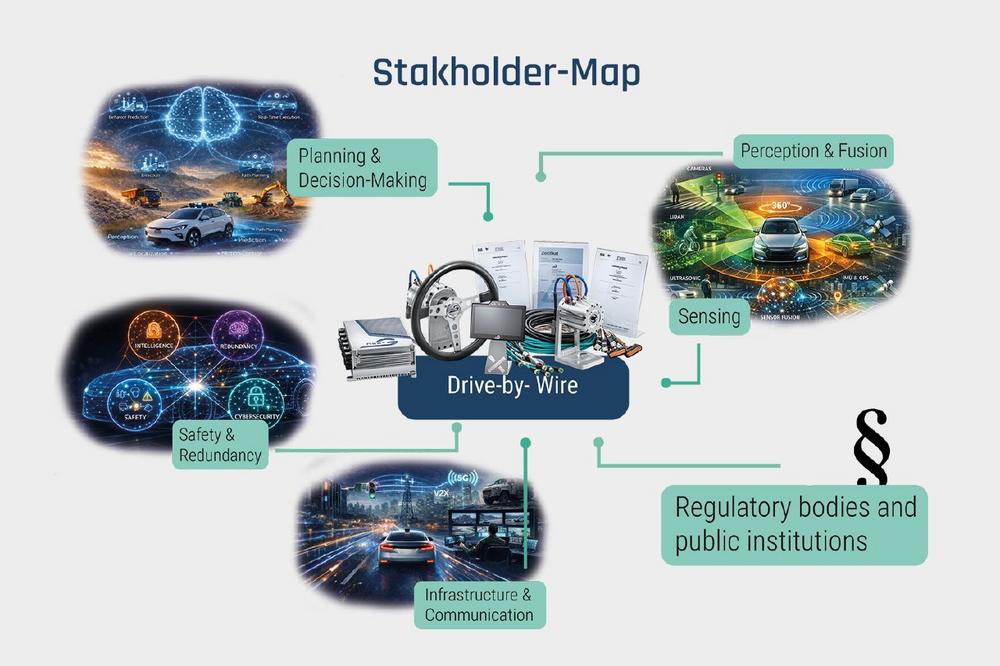
Arnold NextG Blogspot: The stakeholder map – Who builds, regulates, and operates autonomous mobility
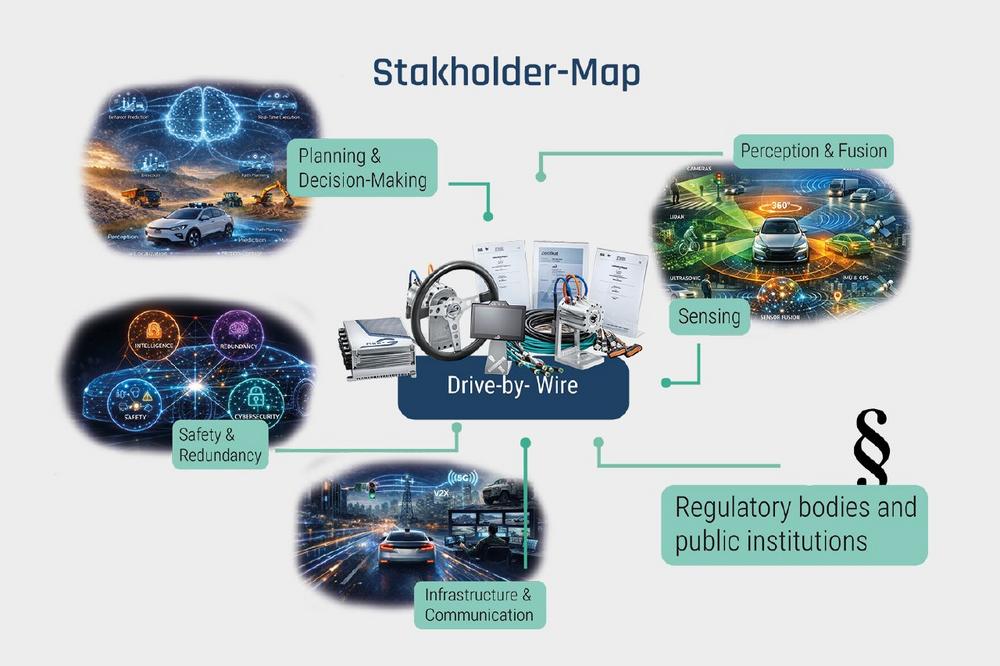
Autonomous mobility does not happen in isolation. Behind every driverless vehicle is a network of players with clearly defined roles, responsibilities, and regulatory requirements. For OEMs and Tier 1 suppliers, this means that autonomy is not a feature, but rather a system cooperation. The central question is therefore no longer: Who builds the vehicle? But rather: Who is responsible for which level in the overall system? OEMs and Tier 1 suppliers: From vehicle platform to system platform OEMs continue to bear overall responsibility for the vehicle. But the differentiation is shifting: mechanical performance values are taking a back seat to software compatibility, E/E architecture, and system openness. Tier 1 suppliers…
-
Arnold NextG Blogspot: Die Stakeholder-Landkarte – Wer autonome Mobilität baut, reguliert und betreibt
Autonome Mobilität entsteht nicht im Alleingang. Hinter jedem fahrerlosen Fahrzeug steht ein Netzwerk aus Akteuren mit klar definierten Rollen, Verantwortlichkeiten und regulatorischen Vorgaben. Für OEMs und Tier-1-Zulieferer bedeutet das: Autonomie ist kein Feature, sondern eine Systemkooperation. Die zentrale Frage lautet daher nicht mehr: Wer baut das Fahrzeug? Sondern: Wer verantwortet welche Ebene im Gesamtsystem? OEMs und Tier-1-Zulieferer: Von der Fahrzeugplattform zur Systemplattform OEMs tragen weiterhin die Gesamtverantwortung für das Fahrzeug. Doch die Differenzierung verschiebt sich: Mechanische Leistungswerte treten hinter Softwarekompatibilität, E/E-Architektur und Systemoffenheit zurück. Tier-1-Zulieferer entwickeln sich dabei zu Integrationspartnern für sicherheitskritische Subsysteme. Brems-, Lenk- und Antriebssysteme müssen nicht nur funktionieren, sondern softwaredefiniert, zertifizierbar und fernsteuerbar sein. Arnold NextG positioniert…
-
Arnold NextG Blogspot: Focus on industries – How autonomy is redefining industry-specific mobility
Autonomous mobility is not a universal solution. Requirements, regulatory frameworks, and risk profiles differ fundamentally depending on whether a vehicle operates in city traffic, at a port terminal, in a mine, or in military service. For OEMs and Tier 1 suppliers, this means that autonomy is not a product, but an adaptable system concept. While the technological cornerstones – perception, planning, connectivity, and drive-by-wire – are broadly similar, domain-specific design determines cost-effectiveness and approval eligibility. Autonomy must adapt to the industry, not the other way around. Public transport: Efficiency and inclusion in geofenced operation In public transport, autonomous systems are mainly used as Level 4 shuttles in clearly defined operating…
-
Arnold NextG Blogspot: Branchen im Fokus – Wie Autonomie branchenspezifische Mobilität neu definiert
Autonome Mobilität ist keine universelle Lösung. Anforderungen, regulatorische Rahmenbedingungen und Risikoprofile unterscheiden sich fundamental – je nachdem, ob ein Fahrzeug im Stadtverkehr, auf einem Hafenterminal, in einer Mine oder im militärischen Einsatz operiert. Für OEMs und Tier-1-Zulieferer bedeutet das: Autonomie ist kein Produkt, sondern ein anpassbares Systemkonzept. Während die technologischen Grundpfeiler – Wahrnehmung, Planung, Konnektivität und Drive-by-Wire – übergreifend ähnlich sind, entscheidet die domänenspezifische Ausgestaltung über Wirtschaftlichkeit und Zulassungsfähigkeit. Autonomie muss sich der Branche anpassen, nicht umgekehrt. Öffentlicher Verkehr: Effizienz und Inklusion im geofenceten Betrieb Im öffentlichen Verkehr werden autonome Systeme überwiegend als Level-4-Shuttles in klar definierten Betriebsgebieten eingesetzt. Ziel ist es, Regionen mit geringer Nachfrage wirtschaftlich zu erschließen, Betriebskosten…
-
Arnold NextG Blogspot: Infrastructure, Connectivity & Teleoperation – The invisible backbone of autonomous systems
When people talk about autonomous driving, the focus is usually on vehicles, algorithms, and sensor technology. But autonomy does not arise in isolation within the vehicle. It is the result of a networked ecosystem of digital infrastructure, communication networks, map services, edge computing power, and control center architecture. Without this foundation, even the most powerful autonomous system remains operationally limited. In recent publications, international expert committees such as ASAM emphasize that the "intelligence" of automated systems is increasingly shifting from the vehicle to a distributed overall system consisting of infrastructure and backend components (ASAM Automated Driving Infrastructure Report, 2024). For OEMs and system integrators, this means that autonomy is a…
-
Arnold NextG Blogspot: Infrastruktur, Konnektivität & Teleoperation – Das unsichtbare Rückgrat autonomer Systeme
Wenn über autonomes Fahren gesprochen wird, stehen meist Fahrzeuge, Algorithmen und Sensorik im Mittelpunkt. Doch Autonomie entsteht nicht isoliert im Fahrzeug. Sie ist das Ergebnis eines vernetzten Ökosystems aus digitaler Infrastruktur, Kommunikationsnetzen, Kartenservices, Edge-Rechenleistung und Leitstellenarchitektur. Ohne dieses Fundament bleibt selbst das leistungsfähigste autonome System operativ eingeschränkt. Internationale Fachgremien wie ASAM betonen in aktuellen Veröffentlichungen, dass sich die „Intelligenz“ automatisierter Systeme zunehmend vom Fahrzeug auf ein verteiltes Gesamtsystem aus Infrastruktur- und Backend-Komponenten verlagert (ASAM Automated Driving Infrastructure Report, 2024). Für OEMs und Systemintegratoren bedeutet das: Autonomie ist eine Systemarchitekturfrage – nicht nur eine Fahrzeugfunktion. Infrastruktur als operative Voraussetzung Autonome Fahrzeuge greifen kontinuierlich auf externe Datenquellen zurück. Dazu zählen hochauflösende HD-Karten…