Household & Commercial Waste Processing: Volume Reduction & Recyclable Material Recovery
In this context, volume reduction is far more than a purely mechanical step. It can reduce transport burdens, make interim storage more manageable, and supply sorting facilities with a more consistent material flow. Material streams prepared early on not only lower residual waste costs but also improve the recovery of recyclables.
Why landfill costs often arise before the waste even reaches the landfill
Landfill costs do not arise only when residual waste is transported away or stored. They are often incurred much earlier—namely, when material streams enter the process that are too bulky, too heterogeneous, or too difficult to dose properly. This increases transshipment costs, storage pressure, transport volume, and the proportion of those fractions that can only be recycled with additional effort—or not at all.
For municipalities and waste management companies, this means: High residual waste costs are often a symptom of a material flow that was not sufficiently prepared beforehand. If material is better standardized and volume-reduced before sorting, downstream process steps can be organized more efficiently. This is evident, for example, in overfilled intermediate storage facilities, additional transshipment operations, or poorly controlled sorting lines. Typical scenarios from commercial waste recycling illustrate precisely this connection between material mix, processing, and cost-effective process management.
Would you like some advice? ARJES offers state-of-the-art shredding solutions for the processing of commercial waste. We can advise you on suitable machine designs and bespoke solutions.
CONTACT US
How volume reduction makes the material flow more economical
Volume reduction changes not only the size of the material but the entire processability of a material flow. Bulky fractions can often be conveyed in a more controlled manner after pretreatment, stored more effectively in intermediate storage, and transferred to subsequent units in a more defined way. This can be particularly helpful where varying materials, limited space, or high logistical pressure converge.
For small to medium quantities, shredders are often sufficient to standardize material streams early on, thereby reducing the load on subsequent process steps. The appropriate solution depends primarily on the material stream, volume, and on-site conditions.
Why pre-processed materials significantly reduce the load on sorting plants
Sorting plants operate more reliably the better the input material is matched to the separation technology. If fractions are fed in that are too bulky, too tangled, or too heterogeneous, susceptibility to malfunctions, the need for re-sorting, and ejection losses increase. Upstream volume reduction can therefore help make the material flow more uniform and allow for more predictable sorting.
For larger material volumes and robust material streams, shredders can help to stabilize the material flow and make it more uniform even before the actual sorting process begins. The key point remains the same: effective sorting does not begin at the plant itself, but often starts with how the material is prepared beforehand.
Which cost factors influence household and commercial waste processing
Those seeking to reduce landfill costs should not focus solely on fees or residual material prices. Several cost categories, which influence one another, are usually economically relevant. These include, above all:
- Transport volume and vehicle utilization
- Interim storage and space requirements
- Disruptions in the material flow
- Additional effort in sorting
- High proportions of residual material with low recyclability
These factors rarely operate in isolation. A bulky material stream can simultaneously take up more space, trigger more transport runs, and impair sorting performance. This is precisely why volume reduction is not a marginal issue, but rather part of a comprehensive economic analysis.
How a more efficient recycling cycle is created step by step
A more economical cycle begins with a simple question: In what condition does the material reach the first relevant processing step? If household or commercial waste is received in a disorganized, bulky, and difficult-to-dose state, the chances of cleanly separating recyclables are limited from the start. If, on the other hand, the material stream is structured early on, volume-reduced, and prepared for the subsequent process, the starting point for everything that follows improves.
The logic can be summarized in five steps: material generation, collection, pre-treatment, sorting, and recovery. It is precisely at the interface between collection and sorting that the greatest economic leverage often arises. Examples from the ARJES News section demonstrate how this can look in practice, where pre-treatment noticeably supports the subsequent material flow.
From a bulky waste stream to a more easily separable fraction
Between bulky raw material and a recoverable fraction, there is usually not a single processing step, but rather a coordinated process chain. Volume reduction is particularly useful when it improves the transition to sorting. This means that the material should not simply be made smaller, but rather prepared in such a way that metals, wood, paper, or other components can be more easily separated or further processed in subsequent steps.
Scrap recycling in particular demonstrates how important volume reduction can be for further separation and recovery. If robust material streams are properly prepared early on, metals can be separated out more effectively in downstream steps and recycled more cleanly.
Which material streams benefit most from volume reduction
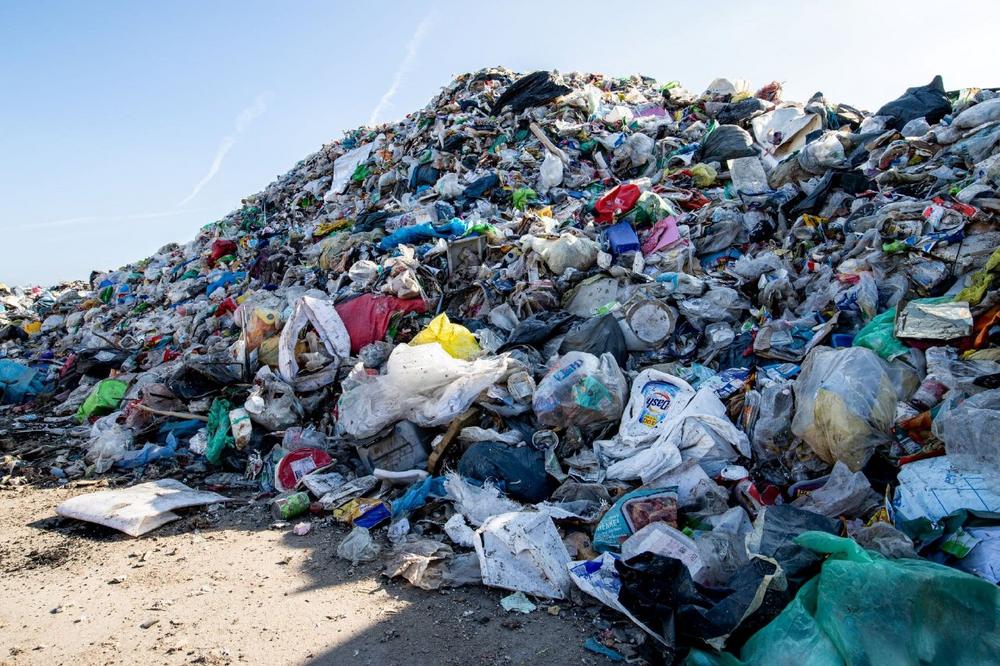
Not every material stream reacts the same way to pretreatment. Volume reduction is particularly useful where materials are bulky, tangled, mixed, or difficult to handle due to their density. Typical examples include:
- Mixed commercial waste
- Packaging fractions and paper
- Natural and waste wood
- Construction and demolition materials
- Scrap-like or metal-containing mixed fractions
For waste management companies and municipalities, this primarily leads to a key question: Which fraction currently causes particularly high volumes of residual material, high handling costs, or sorting problems? That is usually where the greatest potential for volume reduction and improved recovery lies.
What municipalities and waste management companies should consider when planning processes
Effective process planning does not start with the machine, but with the characteristics of the material stream. The decisive factors are composition, variation range, contaminants, the desired target size, and the downstream separation process. Those who clearly define these points early on can more quickly determine whether pretreatment is necessary and what effect it may have on sorting, logistics, and the residual material content.
It is also helpful to view the process not as a rigid line but as a chain of transfer points. Where are bottlenecks, mis-sorting, reloading, or excessive volume occurring today? Where does sorting quality suffer because the material arrives too unevenly? It is precisely at such points that technical and organizational refinements are worthwhile.
Which errors cause unnecessarily high residual material and landfill costs
Many costs arise not from individual misjudgments, but from a chain of small inconsistencies in the process. Typical errors include:
- pre-treatment too late in the material stream
- unclear sorting targets
- lack of coordination between material intake and downstream processes
- too heterogeneous feed to the sorting plant
- insufficient attention to logistics and interim storage
Such errors often result in recyclable fractions ending up in the residual waste or sorting plants operating below their potential. Anyone seeking to reduce landfill costs must identify sources of error in the material stream before they manifest as residual volumes and post-processing.
The role of appropriate technology in waste processing
When household or commercial waste processing is geared toward volume reduction and pre-sorting, technology is needed that fits the material stream and its role in the overall process. For small to medium-sized quantities, more compact shredders may suffice, while more robust material streams and higher volumes require higher-performance solutions.
Whether a mobile or stationary solution is more suitable always depends on the structure of the material stream and the role that pretreatment is intended to play in the overall process. Therefore, what matters is not so much the machine designation as the question of how material flow, sorting, and recovery can be effectively supported by the appropriate processing.
Less residual material, more recovery: what matters in the end
Ultimately, the economic impact of effective processing is evident not only in a smaller volume of material but also in improved material stream quality. When volume reduction helps feed sorting facilities more consistently and better separate recoverable fractions, the residual waste fraction decreases. This is precisely the link between lower landfill costs and a higher recycling rate.
For waste management companies and municipalities, this means: The crucial question is not just how much material is generated, but in what condition it passes through the process. Those who understand volume reduction as part of the recycling logic can consider costs and recovery together, rather than pitting the two goals against each other.
FAQ: Volume reduction and preparation for sorting plants
This FAQ section provides a concise summary of key practical questions.
Why can volume reduction lower landfill costs?
Volume reduction can impact transportation, interim storage, and the amount of residual materials that are difficult to recycle. If material is made process-ready earlier, the proportion of those fractions that are later only landfilled or disposed of at high cost often decreases.
Why can volume reduction lower landfill costs?
Sorting facilities operate more reliably when materials arrive in a more uniform, less bulky, and more easily controllable state. This improves feeding, separation performance, and process stability. Pre-treatment can thus significantly enhance the quality of recovery.
How do sorting facilities benefit from pre-treated material streams?
Mixed or bulky material streams such as commercial waste, packaging, paper, wood, or certain construction and demolition fractions are particularly suitable. The decisive factor is always whether pre-treatment improves sorting and reduces residual waste volumes.
Why does the material feed have such a strong influence on the recycling rate?
The recycling rate depends heavily on how well recyclables can be captured and separated in the process. If the material feed is too uneven or contains too many contaminants, the likelihood of cleanly recovering usable fractions decreases.
What should municipalities and waste management companies focus on first?
The first consideration should be material composition, contaminants, volume, target size, and downstream processes. Those who thoroughly evaluate these points will more quickly identify where volume reduction makes sense and how sorting and recovery can be made more cost-effective.
ARJES GmbH
Borntalstraße 9
36460 Krayenberggemeinde
Telefon: +49 (36969) 58-0
http://www.arjes.de
Marketing
Telefon: +49 (3695) 85 855-265