#esearch that has previously cited 3–4% gains – reinforcing that when employers give flexibility, they gain measurable performance improvements in return.
Hybrid working is also boosting company loyalty, meaning businesses can retain the best talent. Almost three quarters (73%) of working women say that they are more likely to remain working for a company that allows them to save time commuting by working locally. Meanwhile, 64% say hybrid working has enabled them to stay in the workforce when they might otherwise have needed to leave due to caretaking responsibilities. By giving flexibility, employers gain continuity, experience and sustained workforce participation – all essential to boosting national productivity.
The findings suggest that hybrid working creates a beneficious circle; when women are empowered with flexibility and access to professional workspaces closer to home, they gain clearer pathways for progression and stronger engagement – and in turn, businesses gain enhanced collaboration, innovation, loyalty and productivity.
Long, daily commutes hinder progress
The flexibility to work where it is most convenient is opening doors for women, however those that are having to conduct long, often costly commutes into a central office multiple days a week are experiencing significant negative impacts on their personal life and careers.
Seven in 10 (68%) say that commutes reduce the amount of time they have for a personal life and wellbeing, and 64% argue that they make it harder to balance work with other responsibilities. A similar number (67%) say that they are left with less time to spend with family.
Commutes are also impacting professional performance – with reduced energy and productivity at work (61%), difficulty staying motivated in the office (56%) and a reduction in long-term career prospects (41%) – rising to 53% of those aged 18-24, a critical career development stage. Removing unnecessary commuting pressures allows women to give more focus, energy and productivity at work – a clear gain for both employers and employees.
Businesses benefit
Offering female workers flexibility is a win-win for businesses – as a previous study revealed that flexible working models are also driving productivity and talent retention. 69% of flexible businesses report improved productivity in their workforces, and the same percentage believe their policies have enhanced their ability to attract and retain top talent.**
A McKinsey study also revealed how companies with representation of women exceeding 30 percent (and thus in the top quartile) are significantly more likely to financially outperform those with 30 percent or fewer.***
Fatima Koning, CCO of International Workplace Group Plc, commented: “IWG’s latest study shows that when businesses empower women with greater flexibility, they get stronger performance in return – a powerful reflection of this year’s International Women’s Day theme, ‘Give to Gain’. Not only does it increase productivity and offer greater work-life-balance, but it also strengthens collaboration, builds confidence and expands access to leadership networks, while helping women stay and progress in the workforce. Flexibility is no longer optional; it’s fundamental to harnessing and unlocking female talent in the workplace.”
Mark Dixon, CEO of International Workplace Group Plc, commented: “When employees are able to work closer to home in convenient and professional workspaces, they gain more than flexibility. Hybrid working is opening doors to collaboration and career progression, while reducing the drag of long daily commutes. For female talent, flexible working is a catalyst for growth.”
For more information, visit International Workplace Group
* The research was conducted by Censuswide, among a sample of 2002 UK female office workers. The data was collected between 30.01.2026 – 05.02.2026. Censuswide is a member of the Market Research Society (MRS) and the British Polling Council (BPC), and a signatory of the Global Data Quality Pledge. We adhere to the MRS Code of Conduct and ESOMAR principles
** Research among 505 UK business leader participants in January 2025 by Mortar Research. Mortar is Market Research Society (MRS) accredited and the research adhered to MRS guidelines.
*** Why diversity matters even more | McKinsey
Source: Global Workplace Analytics
Visit www.iwgplc.com and for more information on partnering with International Workplace Group, see: https://www.iwgplc.com/develop-a-location
International Workplace Group plc
Baarerstrasse 52
CH6300 Zug
Telefon: +49 (211) 36870058
http://www.iwgplc.com
E-Mail: andreas.rossbach@marco.agency


Das könnte dich ebenfalls interessieren
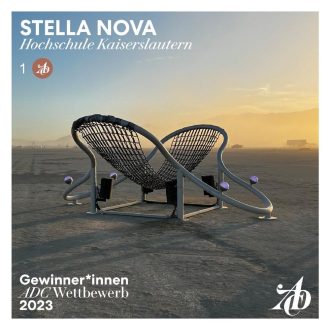
Nachhaltige Kunstinstallation in den USA

In Logistik – Management & Consulting via Fernstudium weiterbilden