125 Years Ago: Opel Celebrates Its First Victory in Motorsports DOWNLOAD
- March 31, 1901: Heinrich Opel wins Königstuhl hill climb race in a modified ‘Motorwagen’
- Early successes: Second Königstuhl victory follows the very next year, Fritz von Opel takes first place in the opening race at Berlin’s AVUS in 1921
- Rally and circuit successes: Walter Röhrl wins European Rally Championship in 1974 and World Rally Championship in 1982 in an Opel; Manuel Reuter takes ITC title in 1996 in the ‘Cliff’ Calibra
- Pioneering role: Opel launches the world’s first electric rally one-make cup in 2021
- Fully electric driving fun: New Opel Mokka GSE brings rally feelings to the road
- Next level: Opel GSE Formula E Team will compete in the ABB FIA Formula E World Championship as of next season
Combined values for Opel Mokka GSE according to WLTP1: Energy consumption 18.5 kWh/100 km, CO2 emissions 0 g/km; CO2 label: A.
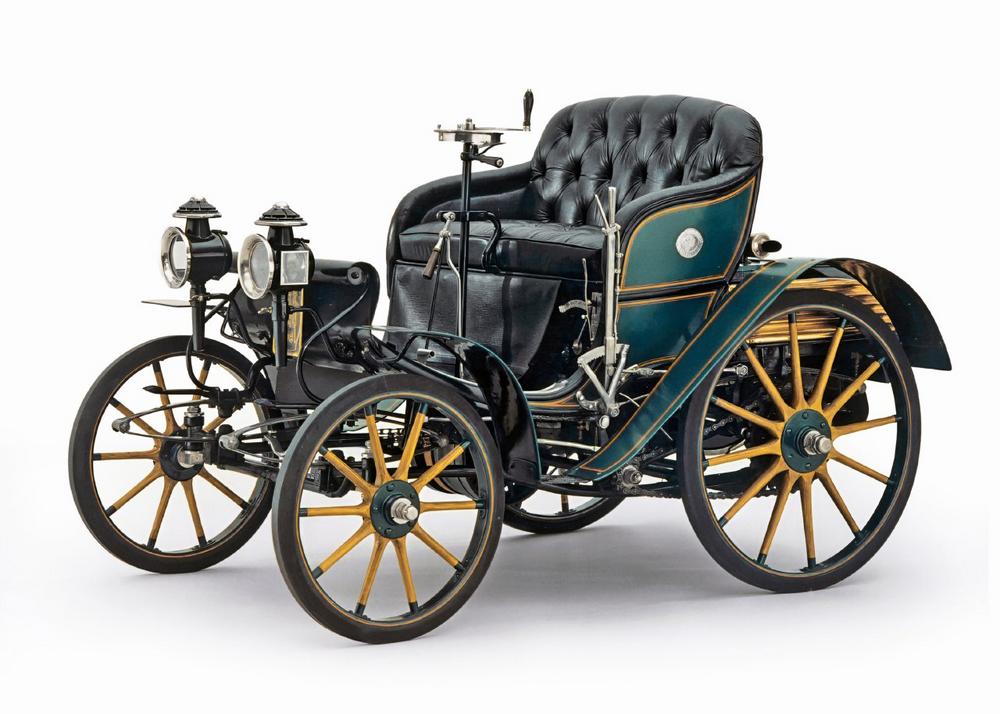
Rüsselsheim. A few days ago, Opel announced that it will be competing in the ABB FIA Formula E World Championship for the first time as of next season. The brand with the Blitz is thus opening a new chapter in its long and successful motorsport history. This history began at the dawn of the 20th century; to be precise, Opel celebrated its first victory in an official race 125 years ago. On March 31, 1901, Heinrich Opel won the hill climb race up the Königstuhl near Heidelberg in Germany in a modified ‘Motorwagen’.
This event marked the start of Opel’s successful motorsports history, which continues to this day across a wide variety of racing and rally series. Over the decades, the brand’s journey has taken it from its first hill climb and road races, through the European and World Rally Championships, to circuit racing with Formula Opel, Formula 3, the German Touring Car Masters (DTM) and the International Touring Car Championship (ITC).
For the past five years, Opel has been demonstrating just how electrifying and thrilling locally emissions-free motorsport can be with the world’s first electric rally one-make cup, which is set to enter its next season in a few weeks’ time with the new Opel Mokka GSE Rally. Meanwhile, customers can also experience the exhilarating GSE driving pleasure, as Opel brings the all-electric rally feeling to the road with the 207 kW (281 PS) Mokka GSE series car.
With its factory team, the Opel GSE Formula E Team, competing in Formula E, the Rüsselsheim-based company is now taking its commitment to electric motorsport to the next level. Taking part in the world’s fastest-growing racing series marks a milestone for Opel on its journey towards an electric future – a future whose roots stretch back to its first motorsport victory 125 years ago.
A dream comes true: Opel’s first victory in motorsports on March 31, 1901
Opel made its debut in motor racing as early as the late 19th century. Heinrich Opel, the second-youngest son of the company’s founder Adam Opel, took part in the first international motor race in Germany – the ‘Aachen–Coblenz’ long-distance race – in May 1899, driving a Patent-Motorwagen ‘System Lutzmann’. Unfortunately, a technical issue prevented him from reaching the finish line. The Opel brothers also took part in subsequent races, though they had to wait a little longer for their first real success. But these early experiences laid the foundations for the first victory that was soon to follow. This was because the brothers were constantly improving their motor cars and, above all, increasing their reliability.
On March 31, 1901, the moment finally arrived: Heinrich Opel took to the track in a modified ‘Motorwagen’ for the first ‘mountain road race’ at the Königstuhl. The race near Heidelberg organised by the Rheinischer Automobilclub is thought to have been the first in the Rhine-Neckar metropolitan region and one of the very first German hill climb races.
The 5 hp Opel vehicle was characterised above all by its light weight: the mudguards, running boards, lights and trim had been removed. Whether consciously or unconsciously – aerodynamic insights would not influence car design until much later – the Rüsselsheim-based carmakers reduced air resistance using leather side skirts and a taut knee cover extending from the flat front end to the top of the seats. All this paid off: Heinrich Opel completed the 4.5-kilometre mountain route – with a 450-metre elevation gain and sections with gradients of up to 16 per cent – in 23 minutes in the optimised ‘Motorwagen’, thereby leaving his competitors far behind.
The motor car’s reliability was particularly impressive – not just during the race. Unlike today, when racing cars are transported to the circuit, Heinrich Opel already made the journey to and from the event in his own vehicle back in 1901. He covered the 180-kilometre route in just four hours, achieving an average speed of 45 km/h which was an outstanding average speed in those days.
No coincidence, but skill: Further Opel victories to follow in the ‘early years’
The Opel brothers quickly recognised the potential of motorsports. Success not only boosted the image of the young brand and its products; the development work also had a positive impact on the reliability of the entire range of cars. And Opel proved the following year that this initial success was no fluke. A new partnership with the French manufacturer Alexandre Darracq gave the Opel team a fresh boost. The newly developed Opel-Darracq motor car was in a league of its own. At the second hill climb race on the Königstuhl on October 26, 1902, Heinrich Opel crossed the finish line in just 10 minutes and 15 seconds – more than four minutes ahead of the next fastest competitor.
The winning streak continued: in the following years, Opel secured further podium finishes with its racing cars. And in 1921, the Rüsselsheim-based team made history at Berlin’s AVUS. More than 200,000 people came to the opening race on the legendary city circuit. Fritz von Opel set off in a fiery red Opel 8/25 hp racing car. To the cheers of the crowd, he fought his way forward lap after lap. In the end, he left his competitors far behind and won after seven laps with a time of 1:04:23 hours, corresponding to an average speed of 128.84 kilometres per hour.
Highlights: European and World Rally Championships and ITC Championship
These ‘early years’ marked the beginning of Opel’s long motorsport tradition, which reached its peak in the 1970s to 1990s. Speaking of rallying: as early as 1966, the Swede Lille-Bror Nasenius won the European Rally Championship for production touring cars in an Opel Rekord B, securing one of Opel’s first major international rally titles. The brand’s rallying history is inextricably linked with the name Walter Röhrl. In 1973, Röhrl and Jochen Berger finished as European vice-champions in an Opel Ascona. In 1974, the duo then dominated the European Rally Championship with six overall victories and 120 points – the highest points total ever achieved at that time – and were crowned European Drivers’ Champions with three rounds still to go. The 1974 European Championship title marked the start of a further rallying career for Röhrl and Opel, which, together with his co-driver Christian Geistdörfer, culminated in the 1982 World Rally Championship title in a 191 kW (260 hp) Ascona 400.
Opel went on to enjoy great success on the circuit as well. In 1996, Manuel Reuter and Opel secured victory in the International Touring Car Championship (ITC) with the legendary ‘Cliff’ Calibra, a 500 hp 2.5-litre V6 racing car. In 2003, the team comprising Reuter, Timo Scheider, Marcel Tiemann and the then head of motorsport Volker Strycek clinched a thrilling victory in the 24-hour race at the Nürburgring in an Opel Astra V8 Coupé.
And today? The future of motorsport is electric, but no less thrilling. Opel has been demonstrating for the past five years in the world’s first electric rally one-make cup that fully electric and therefore locally emissions-free rallying offers just as much excitement – and the brand will soon be doing so for the first time in the Formula E World Championship as well.
[1] The values of a vehicle depend not only on the efficient use of fuel by the vehicle, but are also influenced by driving behaviour and other non-technical factors.
Opel Automobile GmbH
Bahnhofsplatz 1
65423 Rüsselsheim
Telefon: +49 (6142) 7-70
Telefax: +49 (6142) 77-8409
http://de-media.opel.com/de
Communications, Manager International Product
Telefon: +49 (6142) 69-22084
E-Mail: colin.yong@stellantis.com
Telefon: +49 (6142) 6921679
E-Mail: matthias.meyer@opel-vauxhall.com
Telefon: +49 (6142) 6927466
E-Mail: leif.rohwedder@opel-vauxhall.com


Das könnte dich ebenfalls interessieren
Sind wir auf dem Weg zur Mobilitätswende?
Neuer PEUGEOT Landtrek