Hidden in Plain Sight: Shark-Spotting in the New Opel Astra
- Secretive sea creatures: Finding sharks in the new Astra requires a keen eye
- Full of character: Compact class bestseller is sharper and more modern than ever
- Iconic idea: Shark tradition at Opel began more than 20 years ago with a boy’s brainwave
- For shark fans: Customers will also be able to spot little sharks in future Opel models
Combined values for Opel Astra Electric and Astra Sports Tourer Electric according to WLTP1: energy consumption 15.3-15.8 kWh/100 km, CO2 emissions 0 g/km; CO2 label: A.
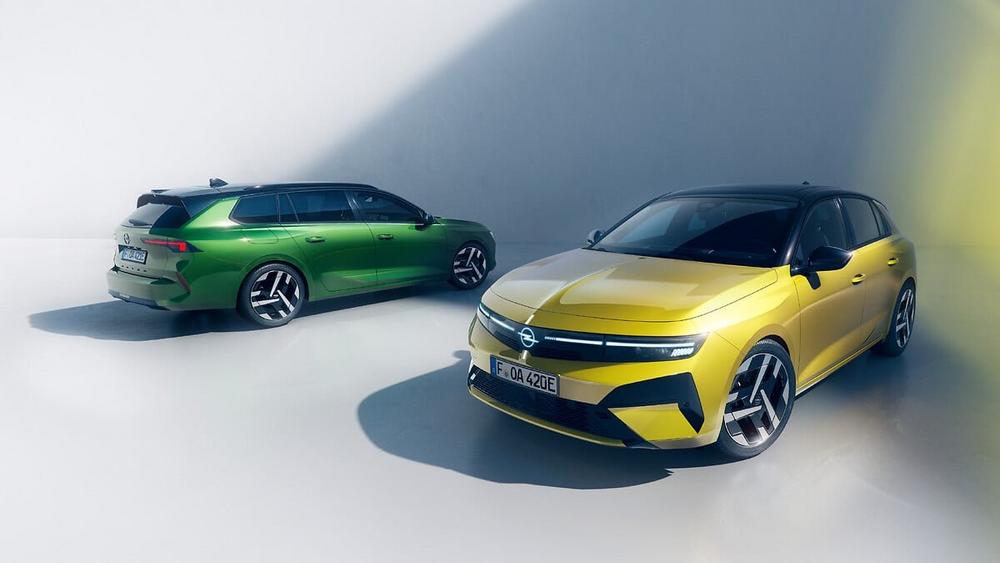
With Easter and the traditional egg hunt just around the corner Opel can offer an exciting alternative activity no matter what the weather – the traditional Opel shark spotting. These secretive sea creatures have been a tradition at Opel for two decades now. To delight fans, the team in Rüsselsheim always comes with new hiding places for the sea dwellers – as is now the case with the new Opel Astra. The compact class bestseller – designed, engineered and built at Opel’s headquarters – not only looks more modern, sharper and more distinctive than ever, but also has a few surprises in store.
The adaptive Intelli-Lux HD lighting system, featuring over 50,000 elements, is not such a surprise but rather the logical next step in lighting technology. Following its introduction in the top-of-the-range Opel Grandland SUV, it is now being used for the first time in the new Astra, which is already available to order. The improved range of the Astra Electric is also a logical step forward, allowing drivers and passengers to travel up to 454 kilometres (WLTP2) between charging stops. The more modern appearance is underlined by the sharper design, featuring an even narrower and more precisely styled Opel Vizor. Additionally, both the Vizor and the Blitz are illuminated.
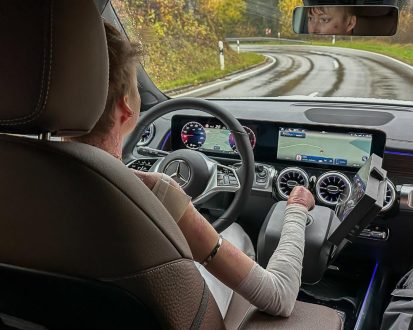
But whilst the new Astra makes an even brighter appearance overall, the little sharks are normally afraid of the light. They feel much more at home beneath the Astra’s surfaces, which are crafted from eco-friendly materials. This means that the search for these cartilaginous fish remains exciting in the newcomer. A little hint: it is worth changing one’s perspective between the front seats and turning things around a bit. And in the luggage compartment of the new Astra Sports Tourer, the sharks might just be ‘swimming’ at higher altitudes than expected.
Iconic brainwave: The Opel sharks story began in 2004
But how come that, for the past 20 years now, miniature sharks have been popping up in all kinds of Opel passenger cars and generating such enthusiasm within the community? A brief look back: One Sunday afternoon in 2004, designer Dietmar Finger was at home working on a sketch for the Corsa D which was to be launched two years later. He was designing the ordinary outer panel of the glove box, which is mostly invisible because it is hidden by the closed passenger door. However, when the glove box is opened, this panel must ensure stability – which it does with ribs integrated in the plastic surface. Finger was designing the ribs when his son looked at the sketch and said, “Why don’t you just draw a shark?” “Why not!” thought the designer and gave the ribs their characteristic shape! The next day, he showed the shark profile to Niels Loeb and the then Corsa Chief Designer was immediately sold on the idea. The shark in the glove box went into series production and the ‘Opel sharks story’ began.
Next came the Zafira, where Karim Giordimaina, then in charge of the interior design, hid three sharks in the compact van’s cockpit. Further permanent ‘shark appearances’ followed, first in the Opel ADAM and subsequently in all other car models up to the current generations of the Grandland, Frontera and Mokka as well as the new Astra, where several tiny sea creatures are hidden in various places.
This has created an iconic ritual. Since the mid-2000s, every interior chief designer has made sure that at the end of the development process of a new model they have at least one shark somewhere in the interior. The exact locations always remain secret, even from top management. The fish therefore often stay hidden until the launch, which makes for an interesting search for shark lovers both inside and outside the company.
Consequently, the ‘Opel shark story’ will continue. Thus, in future Opel vehicles, too, the mini predators will be making their rounds, sometimes more, sometimes less hidden. Depending on the model, they may well change their territory in the depths of the interior and bodywork. So it remains exciting for customers to see where and how many sharks they will discover in their new Opel model.
[1] A vehicle’s values not only depend on the vehicle’s efficient use of fuel, but are also influenced by driving behaviour and other non-technical factors.
[2] The stated range was determined on the basis of the WLTP test procedures (Regulation (EC) No. 715/2007 and Regulation (EU) No. 2017/1151). The actual range may vary under everyday conditions and depends on various factors, in particular personal driving style, route conditions, outside temperature, use of heating and air conditioning as well as thermal preconditioning.
Opel Automobile GmbH
Bahnhofsplatz 1
65423 Rüsselsheim
Telefon: +49 (6142) 7-70
Telefax: +49 (6142) 77-8409
http://de-media.opel.com/de
Communications, Manager International Product
Telefon: +49 (6142) 69-22084
E-Mail: colin.yong@stellantis.com
Telefon: +49 (6142) 6921679
E-Mail: matthias.meyer@opel-vauxhall.com