-
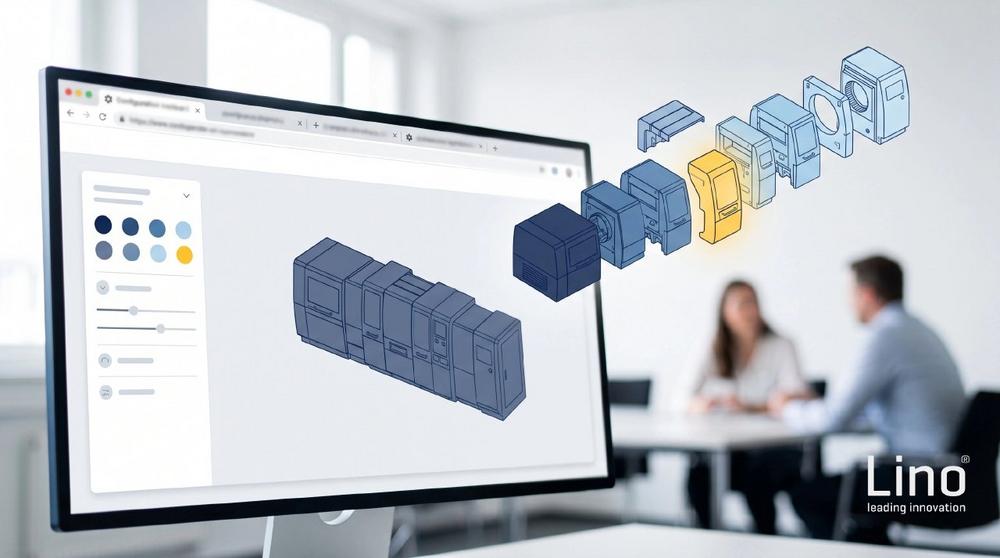
3D-Web-Visualisierung: Varianten interaktiv im Browser erleben
Ein Kunde bekommt ein PDF mit drei Ansichten der Maschine: Frontansicht, Seitenansicht, Explosionszeichnung. Er soll daraus ableiten, wie seine individuelle Variante mit anderer Antriebseinheit und geänderter Verkleidung am Ende aussieht. Das gelingt selten auf Anhieb. Rückfragen per Telefon oder E-Mail folgen, oft über mehrere Runden, bevor Vertrieb und Kunde dieselbe Vorstellung vom Produkt haben. Bei komplexen, variantenreichen Maschinen wiederholt sich dieses Muster bei jeder Anfrage neu. Vom CAD-Modell zum Bild im Browser: Varianten live im Browser darstellen Der Prozess der 3D-Web-Visualisierung setzt genau hier an. Anstelle von Renderings oder Fotos steht ein parametrisches 3D-Modell im Zentrum, das direkt auf Konfigurationsdaten reagiert. Wählt der Kunde eine andere Farbe, ein anderes Maß…
-
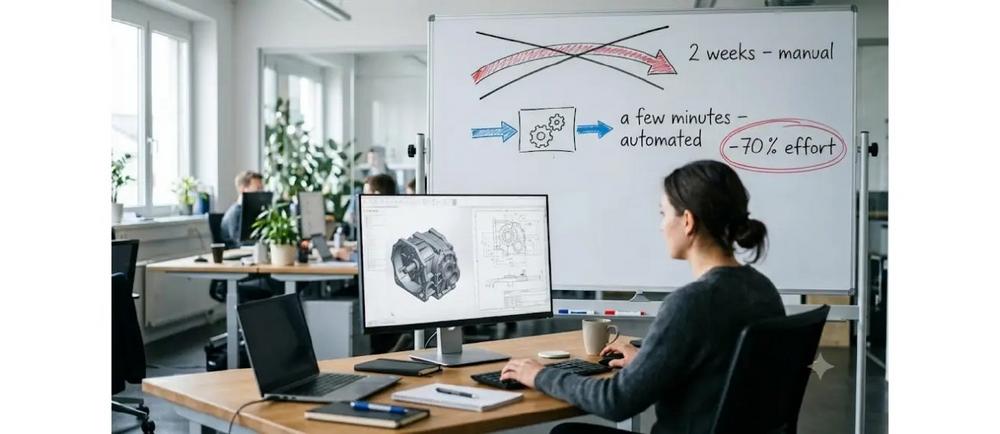
CAD Automation: Why Every Custom Configuration Costs Your Engineering Team Two Weeks
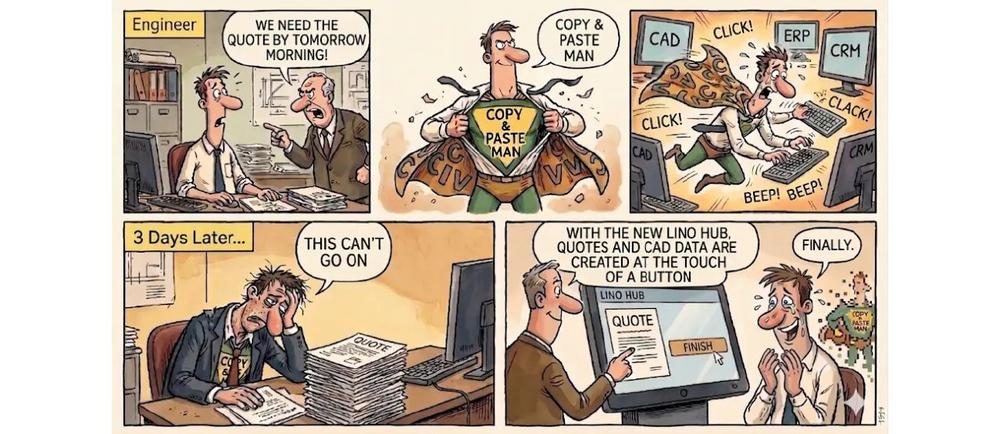
The Bottleneck Between Quote and Drawing A customer requests a custom configuration. Sales configures the matching variant that same morning in the CPQ system. And then the waiting begins: in many machine-building companies, it takes engineering two weeks or more to turn that into a matching 3D model, drawing, and bill of materials. The reason: configuration data from sales doesn’t flow automatically into the CAD system — engineers have to rebuild it manually. Every variant gets modeled twice, at the cost of time and accuracy. What Design Automation in Lino Hub Actually Does Lino Hub CAD Automation addresses exactly this interface. The module translates configuration results generated in sales directly…
-
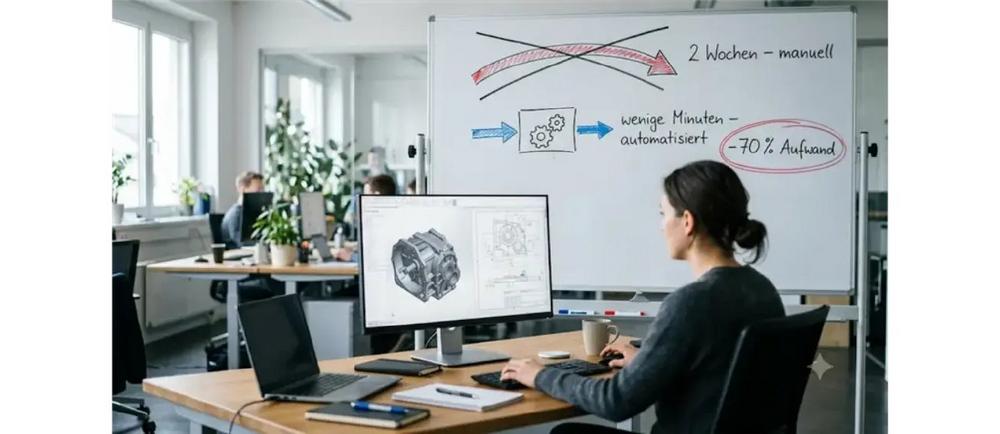
CAD-Automation: Warum jede Sonderausführung Ihre Konstruktion zwei Wochen kostet
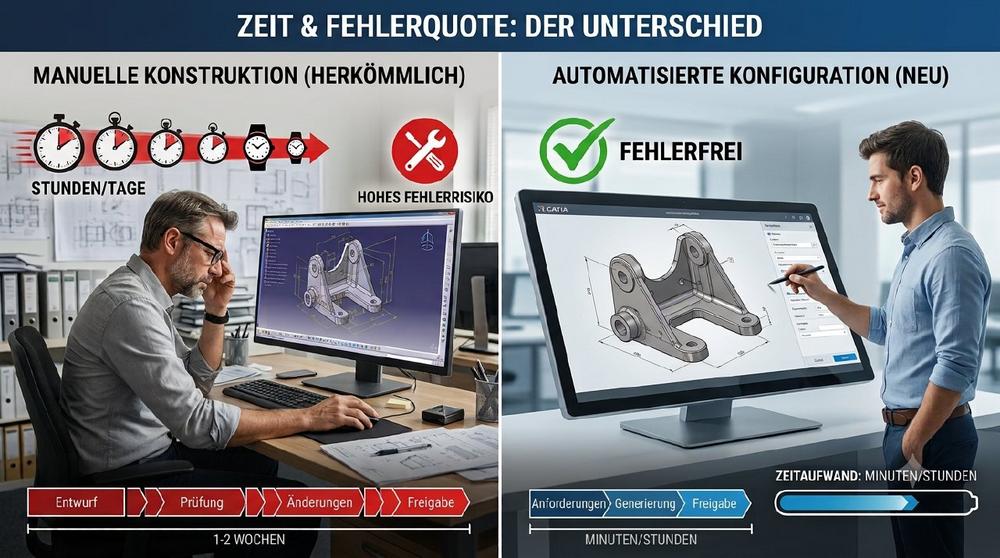
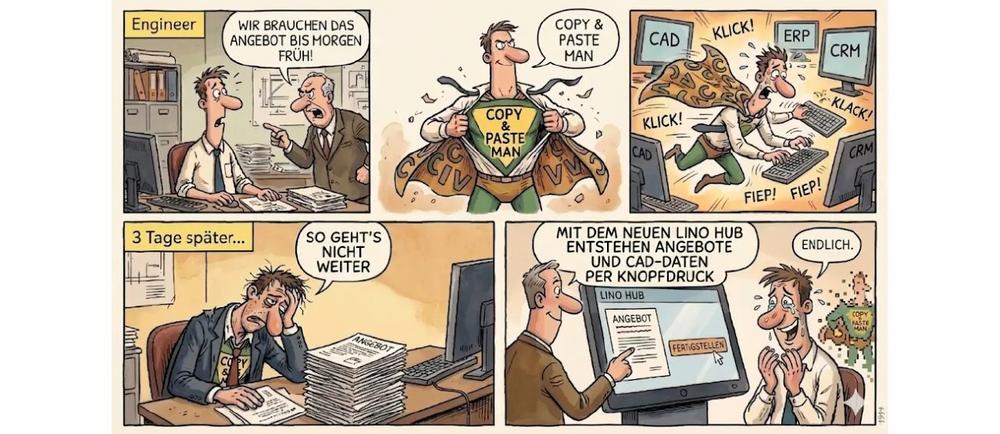
Der Engpass zwischen Angebot und Zeichnung Ein Kunde fragt eine Sonderausführung an. Der Vertrieb konfiguriert die passende Variante am selben Vormittag noch im CPQ-System. Und dann beginnt das Warten: Bis die Konstruktion daraus ein passendes 3D-Modell, eine Zeichnung und eine Stückliste erstellt hat, vergehen in vielen Maschinenbauunternehmen zwei Wochen oder mehr. Der Grund: Die Konfigurationsdaten aus dem Vertrieb landen nicht automatisch im CAD-System, sondern werden von Konstrukteuren manuell nachgebaut. Jede Variante entsteht so ein zweites Mal – mit entsprechendem Zeitaufwand und Fehlerrisiko. Was Design Automation im Lino Hub konkret leistet Lino Hub CAD Automation setzt genau an dieser Schnittstelle an. Das Modul übersetzt die im Vertrieb erzeugten Konfigurationsergebnisse direkt…
-
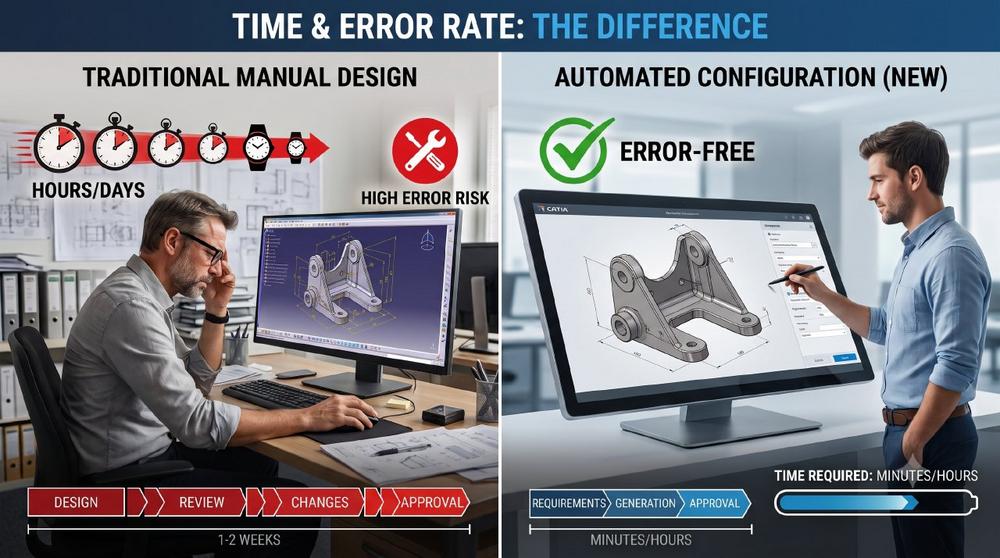
Process Automation in Mechanical Engineering: How Companies Are Removing Manual Routine from Design
A customer requests a custom variant, sales commits to a delivery date, and the design department begins the search for the right CAD model. Weeks pass before the drawing and bill of materials are finished, because every variant is adapted by hand. This scenario describes an everyday reality that many design engineers in mechanical engineering know well – and this is exactly where process automation comes in: it replaces manual, error-prone individual steps with predefined, repeatable workflows. What Process Automation Delivers in Engineering As a key building block of Engineering Automation, process automation connects CAD, PDM, and ERP systems into end-to-end workflows and eliminates existing media breaks. With Lino Automate,…
-
Prozessautomation im Maschinenbau: Wie Unternehmen manuelle Routine aus der Konstruktion nehmen
Ein Kunde fragt eine Sonderausführung an, der Vertrieb sagt einen Liefertermin zu, und in der Konstruktion beginnt die Suche nach dem passenden CAD-Modell. Wochen vergehen, bis Zeichnung und Stückliste fertig sind, weil jede Variante von Hand angepasst wird. Dieses Szenario beschreibt einen Alltag, den viele Konstrukteure im Maschinenbau kennen – und genau hier setzt Prozessautomation an: Sie ersetzt manuelle, fehleranfällige Einzelschritte durch vordefinierte, wiederholbare Abläufe. Was Prozessautomation im Engineering konkret leistet Als wichtiger Baustein von Engineering Automation verbindet die Prozessautomation CAD-, PDM- und ERP-Systeme zu durchgängigen Workflows und eliminiert bestehende Medienbrüche. Mit Lino Automate lassen sich z. B. wiederkehrende Aufgaben – das Öffnen, Bearbeiten und Ablegen technischer Daten – über…
-
System Integration: The Difference Between Point Solutions and End-to-End Continuity
Manufacturing companies invest millions in CAD systems, PDM platforms, and ERP software. And yet an engineer still transfers part numbers and bills of materials by hand from one system to another. This is not an isolated case. It is standard practice across a large share of the German machinery industry, and it costs more than the original software investment combined. The Real Problem Isn’t “Skilled Labor Shortage” The industry has spent years debating the shortage of skilled workers. What gets overlooked: a significant share of engineering capacity is lost not to complex design work, but to data maintenance. Studies show that engineers spend up to 30% of their working time…
-
Systemintegration: Der Unterschied zwischen Insellösung und Durchgängigkeit
Maschinenbauunternehmen investieren Millionen in CAD-Systeme, PDM-Plattformen und ERP-Software. Und dann überträgt ein Konstrukteur Artikelnummern und Stücklisten per Hand von einem System ins andere. Das ist kein Einzelfall. Das ist Standard in einem Großteil der deutschen Maschinenbaubranche, und es kostet mehr als die ursprüngliche Softwareinvestition zusammen. Das eigentliche Problem heißt nicht „Fachkräftemangel“ Die Branche diskutiert seit Jahren über fehlende Fachkräfte. Was dabei zu kurz kommt: Ein erheblicher Teil der Engineering-Kapazität geht nicht an komplexe Konstruktionsaufgaben verloren, sondern an Datenpflege. Studien belegen, dass Konstrukteure bis zu 30 % ihrer Arbeitszeit für manuelle Übertragungen, doppelte Datenpflege und das Nacharbeiten von Übertragungsfehlern aufwenden. Das sind keine Randprobleme. Das sind täglich bis zu 2,5 Stunden…
-
Engineering Automation: How Mechanical and Plant Engineers Seamlessly Connect Sales, Engineering, and Manufacturing
Manual Handoffs Cost More Than Engineering Hours Organizations in mechanical and plant engineering that deal daily with the same product data being maintained separately across CAD, PDM, ERP, and CRM systems know the consequences: errors that propagate through the entire order processing chain and engineers spending their time on routine tasks rather than advancing product development. According to an internal analysis of Lino customer projects, up to 30% of all errors in typical engineering processes originate from redundant, manual data entries between systems. These errors are not the result of insufficient diligence — they are the result of a process architecture built on manual data transfer. Engineering Automation addresses…
-
Engineering Automation: Wie Maschinen- und Anlagenbauer Vertrieb, Konstruktion und Fertigung durchgängig verbinden
Manuelle Übergaben kosten mehr als Ingenieursstunden Wer im Maschinen- oder Anlagenbau täglich erlebt, wie dieselben Produktdaten in CAD, PDM, ERP und CRM separat gepflegt werden, kennt das Ergebnis: Fehler, die sich durch die gesamte Auftragsabwicklung ziehen und Konstrukteure, die Routineaufgaben bewältigen statt Entwicklung voranzutreiben. Laut einer internen Auswertung von Lino-Kundenprojekten entstehen in typischen Engineering-Prozessen bis zu 30% aller Fehler durch redundante, manuelle Dateneingaben zwischen Systemen. Diese Fehler sind nicht das Ergebnis mangelnder Sorgfalt – sie sind das Ergebnis einer Prozessarchitektur, die auf manuellen Datentransfer aufbaut. Engineering Automation setzt an diesem Punkt an: datengetriebene Automatisierungslösung, die sich nahtlos in die vorherrschende Systemarchitektur integrieren lässt und vier essentielle Automatisierungsebenen zu einer…
-
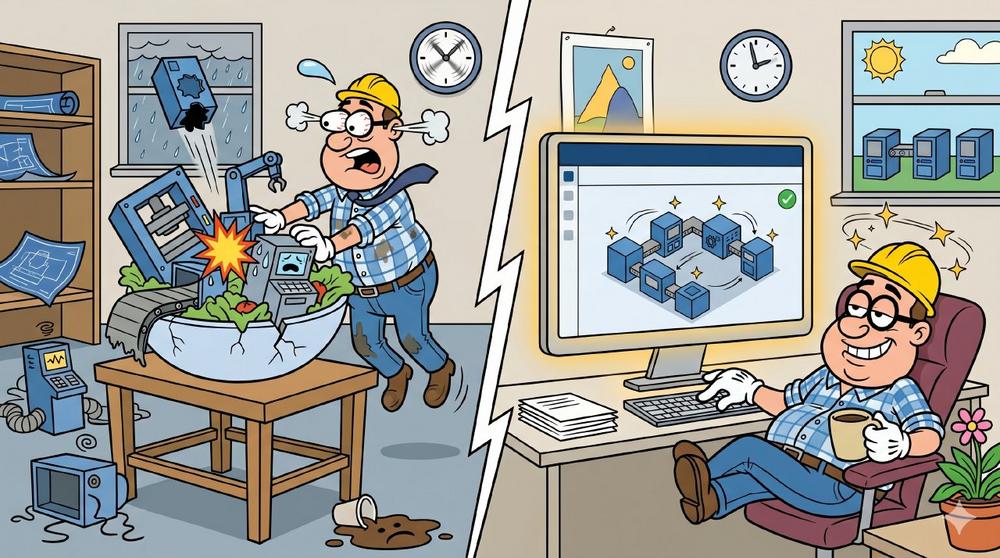
Wer Anlagen noch als 2D-Skizze plant, riskiert den Auftrag!
Trotzdem liefern viele Unternehmen ihren Kunden bis heute abstrakte 2D-Grundrisse, die weder Höhen noch Kollisionen abbilden. Das ist kein Ausdruck von Sparsamkeit. Es ist ein struktureller Wettbewerbsnachteil – und er ist behebbar. Das 2D-Problem ist kein Detailproblem Wer ein Anlagenlayout auf Basis einer 2D-Skizze anbietet, zeigt seinem Kunden nicht, was er wirklich kauft. Räumliche Engpässe, Servicewege, Überfahrthöhen – in der Draufsicht unsichtbar. Entscheidungen entstehen auf Basis unvollständiger Daten. Wenn die Montage startet, beginnt die Überraschung: falsch positionierte Module, Kollisionen mit Gebäudestrukturen, fehlende Zugänge. Wer dann nacharbeitet, zahlt – mit Zeit, mit Geld und mit dem Vertrauen des Kunden. Und wer in der Angebotsphase bereits ein 3D-Layout vorlegt, das den Aufstellplan…